


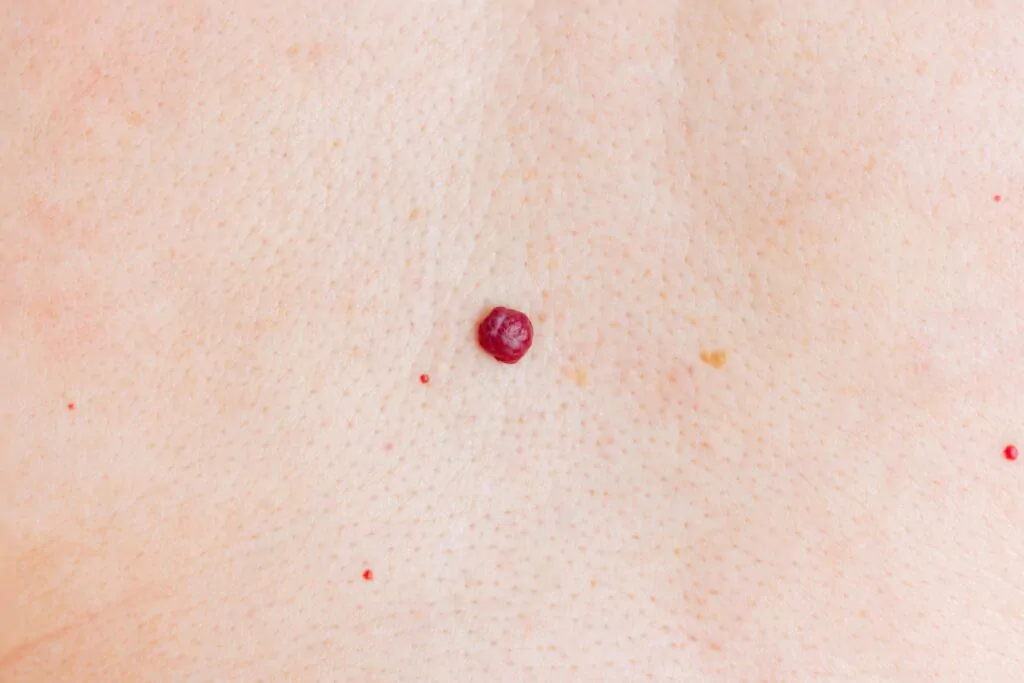
A hemangioma is a benign growth that develops as a result of the proliferation of blood vessels. It may appear as a red or burgundy spot or nodule on the skin. In most cases, a hemangioma does not cause discomfort or serious problems; however, in some cases, it may become injured, bleed, and create a cosmetic concern.
Our dermatologist in Lviv emphasizes that although a hemangioma is a benign growth, it should still be regularly monitored and examined.
What Does a Hemangioma Look Like?
The appearance of a hemangioma may vary depending on its depth and the type of blood vessels from which it developed. That is why such growths can differ in size, shape, and color.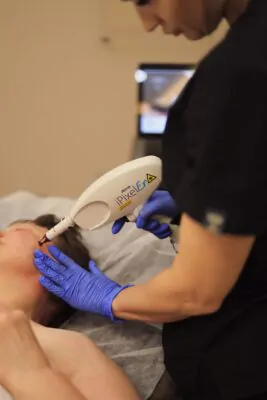
Hemangiomas most commonly develop on the face, neck, scalp, back, arms, and legs. Some lesions remain unchanged for years, while others gradually increase in size. Therefore, any vascular changes on the skin should be evaluated by a dermatologist.
Causes of Hemangioma
At present, the exact causes of hemangiomas are unknown. However, modern medicine identifies several factors that may contribute to their development:
- Congenital vascular features – for example, hemangiomas in children often develop during fetal growth. This occurs when the vascular system develops abnormally at a certain stage, causing some blood vessels to grow excessively.
- Genetic predisposition – if hemangiomas have occurred in close relatives, the risk of developing them may be higher.
- Hormonal changes – in adults, hemangiomas may develop due to hormonal imbalances, particularly during pregnancy, menopause, or endocrine disorders.
- Ultraviolet exposure – excessive sun exposure or frequent use of tanning beds may negatively affect blood vessels and contribute to the development of vascular growths.
- Circulatory disorders and vascular changes – sometimes hemangiomas develop as a result of vascular system dysfunction or chronic inflammatory processes.
Hemangiomas in Children
There are many cases in which a hemangioma appears in infants during the first weeks after birth. Typically, infantile hemangiomas grow for a certain period and may then gradually shrink. However, it is not always advisable to wait for the lesion to disappear on its own.
Our dermatologist emphasizes that you should consult a doctor if a hemangioma:
- is growing rapidly;
- is located near the eyes, nose, or lips;
- is frequently injured;
- bleeds;
- develops ulcers.
Such lesions can create not only a cosmetic concern but may also affect normal tissue development.
What Types of Hemangiomas Are There?
Hemangiomas differ in structure, depth, and appearance.
- Capillary hemangioma – the most common type of hemangioma, formed from small superficial blood vessels. Typical characteristics include a red or burgundy color, well-defined borders, a soft surface, and slight blanching when pressed.
- Combined hemangioma – includes both superficial and deep components.
- Mixed hemangiomas – have a more complex structure and may contain not only vascular tissue but also other tissue types.
- Cavernous hemangioma – consists of larger vascular cavities and is usually located deeper beneath the skin. It may have a bluish tint and a soft texture.
How to Distinguish a Hemangioma from Other Skin Lesions?
Patients often confuse skin hemangiomas with moles, papillomas, and spider veins. The main characteristics of a hemangioma include a red, burgundy, or bluish color, vascular origin, blanching under pressure, and a tendency to grow.
Unlike moles, hemangiomas do not contain the pigment melanin and therefore are not brown in color.
Symptoms of a Hemangioma
Hemangiomas usually do not cause discomfort or pain, but there are certain symptoms that require medical attention.
These symptoms include rapid growth, changes in color, pain, bleeding, and frequent irritation caused by clothing or jewelry.
Please note that if a hemangioma is located in an area of constant friction, the risk of complications is significantly higher.
Is a Hemangioma Dangerous?
In most cases, hemangiomas do not pose a threat to life. They are not malignant tumors and only rarely cause serious complications.
However, there are situations in which treatment is necessary, so any noticeable changes should be evaluated by a doctor.
When Should a Hemangioma Be Removed?
After an examination, doctors at our clinic decide whether hemangioma removal is necessary based on the following indications: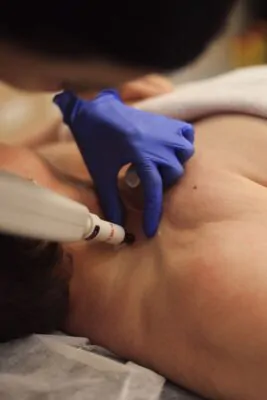
- the lesion is actively growing;
- there is a risk of repeated injury;
- bleeding occurs;
- the hemangioma is located on the face;
- the lesion causes psychological discomfort;
- there is inflammation or infection.
Special attention should be paid to hemangiomas located near the eyes, nose, lips, and in intimate areas.
Diagnosis of a Hemangioma
In most cases, a doctor can make a preliminary diagnosis during a physical examination. However, dermoscopy is often performed to accurately determine the type of lesion.
Dermoscopy is a modern, painless skin examination method that allows the structure of a lesion to be examined in detail under magnification.
Hemangioma Treatment
Treatment depends on the type, size, location, and growth rate of the hemangioma. Modern medicine uses laser removal, radio wave treatment, and electrocoagulation. Today, laser removal is considered one of the most effective and comfortable treatment methods for hemangiomas.
Why Is Laser Hemangioma Removal Considered the Best Treatment Option?
During laser treatment, healthy tissues are not damaged because the laser targets only the hemangioma.
The main advantages of the procedure include:
- minimal tissue trauma;
- no scarring;
- fast healing;
- short procedure duration;
- patient comfort;
- high effectiveness.
During the procedure, the laser beam heats the blood vessels within the hemangioma and gradually seals them. As a result, the lesion becomes lighter and eventually disappears.
How Is Laser Removal Performed?
Laser hemangioma removal at our clinic is performed by a dermatologist. Before the procedure, the doctor conducts a consultation and examination, cleanses the skin, performs the laser treatment, and then applies a soothing product. The duration of the procedure depends on the number and size of the hemangiomas and usually ranges from 10 to 30 minutes.
After the procedure, mild swelling or redness may occur. This is a normal reaction that typically resolves within a few hours.
Recovery After the Procedure
For better and faster healing, the dermatologist may recommend the following:
- avoid injuring the treated area;
- do not remove the crust yourself;
- protect the treated area from sunlight;
- avoid saunas and swimming pools until the area has healed;
- always use sunscreen.
Why Shouldn’t a Hemangioma Be Removed at Home?
Our doctors do not recommend removing a hemangioma at home using cauterization, mechanical damage, or dressings with ointments, as this may lead to severe bleeding, infection, inflammation, scarring, or recurrence of the lesion.
When Should You See a Doctor?
You should not postpone a medical consultation if a hemangioma:
- is growing;
- changes shape or color;
- starts bleeding;
- causes pain;
- is frequently injured;
- appears in adulthood;
- causes aesthetic discomfort.
The sooner you consult a dermatologist, the easier and more effective the treatment will be.
In summary, hemangiomas are benign growths that should not be ignored, as they may enlarge, become injured, and lead to complications.
With modern treatment methods, hemangiomas can be removed painlessly and without a prolonged recovery period. Laser removal is considered the most effective option because it provides excellent cosmetic results and helps minimize the risk of scarring.
At the Myroslava Novosilska Aesthetic Medicine Clinic, we provide professional diagnosis of skin lesions and select an individualized approach for every patient.

Candidate of Medical Sciences.
Dermatologist, trichologist, transplant surgeon.
President of the Ukrainian Association of Hair Restoration Surgery.
Member of ISHRS,
Honorary member of the Fue Asia Academy Faculty.
Work experience 20 years

 UA
UA RU
RU