


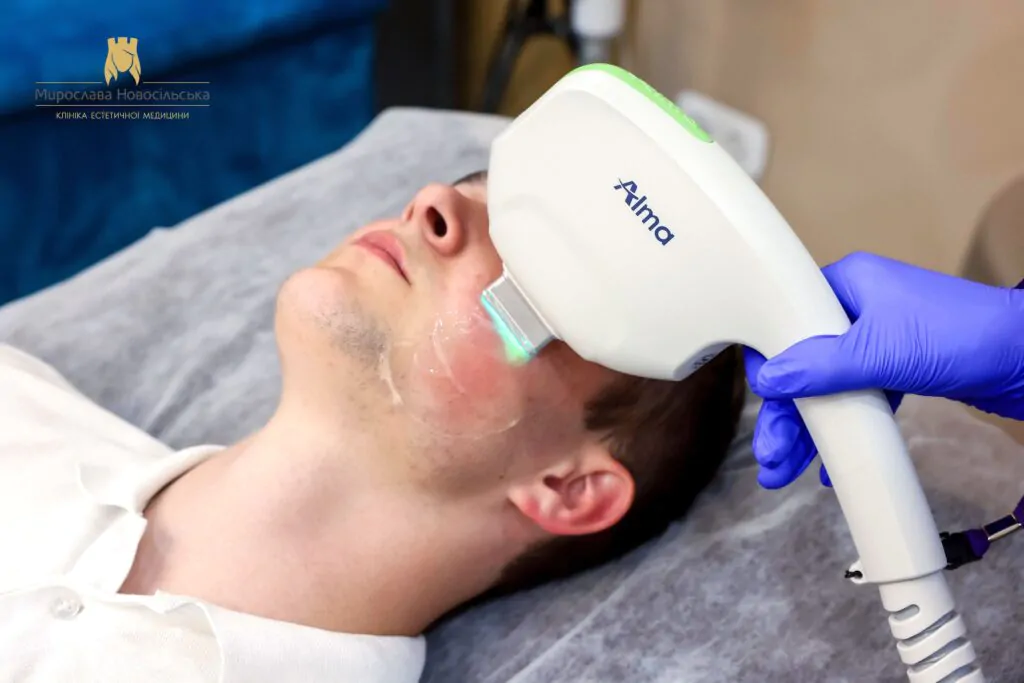
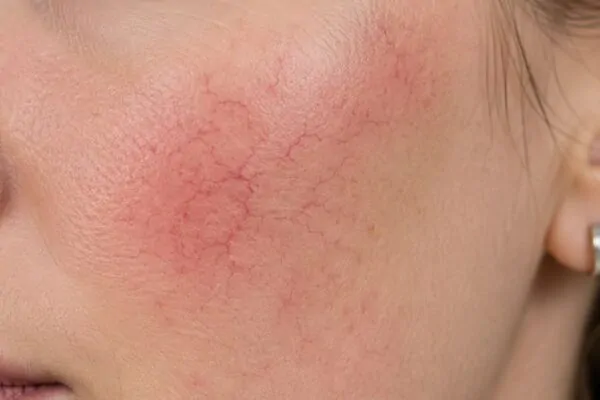
 Redness on the cheeks, visible spider veins, or a noticeable network of tiny capillaries on the face may be the first signs of couperose. Temporary redness after physical activity, exposure to cold or heat is a normal physiological response. However, if the redness persists for a long time, occurs regularly without an obvious cause, or is accompanied by visible capillaries, it may indicate persistent dilation of superficial blood vessels.
Facial couperose is often perceived as merely a cosmetic concern that can be concealed with makeup. However, decorative cosmetics do not eliminate the underlying cause of the problem. Modern aesthetic medicine offers effective treatments that reduce the appearance of couperose, make visible blood vessels less noticeable, and restore a healthy-looking complexion. The key to achieving the best results is timely consultation with a specialist.
What Is Couperose?
Couperose is a persistent dilation of small superficial blood vessels (capillaries), causing them to become visible through the skin. It most commonly appears on the cheeks, sides of the nose, chin, and cheekbones, where capillaries are located closest to the skin’s surface.
The main signs of couperose include:
- Redness that initially appears occasionally (as a reaction to certain triggers) but gradually becomes permanent;
- Visible spider veins (telangiectasias) or a clearly defined network of capillaries that becomes increasingly noticeable over time;
- Dryness, flaking, burning sensations, and increased skin sensitivity to cosmetics, temperature changes, or water.
People with thin and sensitive skin are most likely to develop couperose. However, it can affect individuals of any age and any skin phototype when predisposing factors are present.
Main Causes of Couperose
Capillaries do not become permanently dilated overnight. In most cases, couperose develops due to a combination of internal predispositions and external factors that gradually weaken the skin’s protective barrier.
The most common causes of couperose include:
- Genetic predisposition. The elasticity of blood vessel walls is often inherited. If your parents or close relatives have visible facial capillaries, your risk of developing couperose is significantly higher.
- Hormonal changes. The condition of the vascular system is closely linked to hormonal balance. Couperose often first appears during pregnancy, while taking oral contraceptives, during menopause, or as a result of endocrine disorders.
- Photoaging (UV exposure). Excessive sun exposure without SPF protection or frequent use of tanning beds damages collagen and elastin. These structural proteins support capillary walls, and their loss allows blood vessels to dilate more easily.
- Chronic stress. Constant emotional stress increases cortisol production, causing spasms of larger blood vessels and increasing pressure within the superficial capillary network.
- Skin damage caused by improper skincare. Frequent use of harsh facial scrubs (such as apricot kernel or coffee scrubs), aggressive cleansing brushes, and alcohol-based toners gradually thins the epidermis and mechanically damages fragile capillaries.
External Factors That Can Worsen Couperose
Facial redness and the visibility of capillaries are strongly influenced by lifestyle habits. Sensitive skin reacts quickly to anything that causes a sudden increase in blood flow to the face and dilation of superficial blood vessels.
The most common triggers include:
- Sudden temperature changes. Saunas, steam baths, hot showers, washing with very hot or ice-cold water, and rubbing the face with ice place significant stress on weakened blood vessels.
- Diet. Spicy, highly seasoned, and very hot foods contain compounds such as capsaicin (found in chili peppers), which rapidly dilate capillaries.
- Alcohol and smoking. Alcohol initially causes vascular spasms followed by prolonged dilation of small blood vessels, making facial redness more pronounced.
- Caffeine and chocolate. Coffee, strong black tea, and chocolate stimulate blood circulation and may make visible capillaries more noticeable.
Stages of Couperose
Couperose develops gradually. Without proper care and treatment, the condition progresses over time, making visible blood vessels increasingly difficult to conceal with makeup.
The condition is generally divided into several stages:
- Stage 1 (early stage). The skin becomes prone to sudden flushing. Redness appears after washing with hot water, drinking coffee, or exposure to cold weather. This temporary redness (erythema) usually disappears within minutes or a few hours. The affected skin may also become dry.
- Stage 2. Capillaries gradually lose their ability to constrict. Small isolated spider veins (thin pink or red lines) appear on the cheeks and around the nose, while overall facial redness becomes more persistent.
- Stage 3. The network of dilated blood vessels expands and becomes permanent, often developing a bluish or purplish tint. The affected skin becomes chronically dehydrated, highly sensitive, and may be accompanied by persistent burning, tingling, or itching.
How Is Couperose Different from Rosacea?
In dermatology and aesthetic medicine, couperose is not considered a separate disease. It is most commonly classified as a cosmetic concern or as one of the early stages of rosacea. However, these are two different conditions that should be distinguished in time to choose the appropriate treatment.
The main differences are:
- Couperose is purely a vascular condition. In this case, the capillaries lose their elasticity and become dilated, forming a visible network of blood vessels on the face. There are no inflammatory lesions (such as pimples or pustules) on the skin.
- Rosacea is a chronic inflammatory skin disease with a recurrent course. In addition to persistent redness, it is accompanied by papules and pustules (rosacea bumps), tissue swelling, and a strong sensation of heat and burning.
Since the symptoms of couperose and rosacea can be similar, it is important to avoid self-treatment. Only a physician can determine the exact nature of the condition, establish an accurate diagnosis, and recommend the most appropriate treatment after an examination.
Can Couperose Be Treated at Home?
This is one of the most common questions patients ask. The answer from dermatologists and aesthetic medicine specialists is clear: no, it is impossible to completely remove dilated blood vessels at home.
Even the most expensive anti-couperose cream or serum cannot “erase” a capillary that has already lost its elasticity or become permanently dilated.
- What skincare products can actually do: Products containing vitamins C and K, niacinamide, and Centella asiatica are valuable for prevention. They help strengthen healthy blood vessel walls, reduce chronic inflammation, and slightly minimize visible redness.
- What actually removes visible blood vessels: Professional energy-based treatments. These procedures target damaged capillaries directly, causing their walls to seal together, after which the treated vessel gradually disappears.
Skin affected by couperose requires extremely gentle care. Harsh facial scrubs, alcohol-based lotions, and rubbing the skin with ice should be strictly avoided. The key daily skincare principles are intensive hydration, avoiding excessive heat, and using broad-spectrum SPF protection every day of the year.
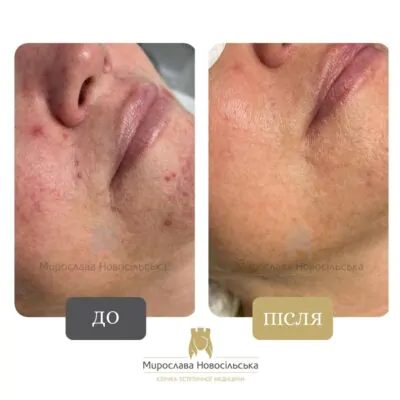
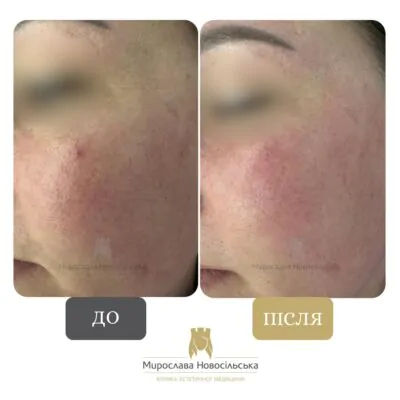
Modern Treatment Methods for Couperose
At our aesthetic clinic in Lviv, we use a comprehensive approach that combines rapid removal of visible vascular changes with deep skin restoration. Each facial couperose treatment plan is tailored individually to every patient.
IPL Phototherapy
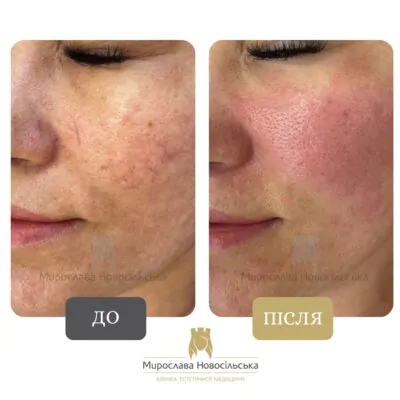
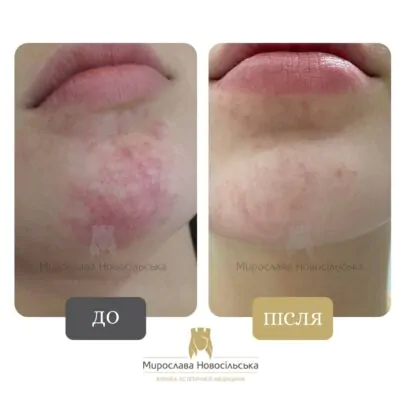
IPL Phototherapy is one of the most effective methods for treating couperose. A specialized device emits light pulses of a specific wavelength. This light energy is absorbed by skin chromophores (oxyhemoglobin inside blood vessels), converted into heat, and safely seals the dilated capillary. The surrounding tissues remain unharmed.
Results of an IPL treatment course:
- Complete removal of spider veins and small visible capillary networks;
- Significant reduction of persistent facial redness;
- More even skin tone and improvement of pigmentation;
- Skin rejuvenation through stimulation of natural collagen production, improving firmness and overall skin quality.
How many sessions are needed?
The treatment plan is determined by the specialist after examining your skin and evaluating the severity of couperose. In most cases, a course consists of 4–6 sessions performed at intervals of 7–14 days.
Mesotherapy
Mesotherapy involves injecting specially formulated solutions containing vitamins, antioxidants, and active ingredients that help strengthen blood vessel walls and improve the overall condition of the skin. It is important to understand that mesotherapy does not remove large visible blood vessels; instead, it serves as an additional component of комплексного treatment.
After a course of mesotherapy:
- Microcirculation improves;
- Skin sensitivity and its tendency toward redness decrease;
- Capillary walls become stronger;
- The complexion becomes healthier and more even.
Combining IPL phototherapy with mesotherapy allows visible couperose to be treated while simultaneously improving the overall health and appearance of the skin.
Dermatologist’s Tips for Skin Care After Couperose Treatment
To maintain your results for as long as possible, follow these simple daily skincare recommendations:
- Apply a broad-spectrum sunscreen with SPF 30–50 every day before going outdoors, regardless of the season.
- Avoid thermal stress by refraining from saunas, steam baths, and washing your face with hot water.
- Choose gentle skincare products (enzyme powders instead of scrubs and mild creams designed for sensitive skin).
- Protect your face from strong wind and freezing temperatures during winter by using protective cold creams.
The sooner you consult a specialist, the easier, faster, and more cost-effective the treatment will be. In the early stages of couperose, just one or two procedures may be enough to restore a healthy, even, and radiant complexion.
Book a consultation with one of our dermatology and aesthetic medicine specialists today. We will create a personalized treatment plan to restore your skin’s health and help you feel confident again.

Candidate of Medical Sciences.
Dermatologist, trichologist, transplant surgeon.
President of the Ukrainian Association of Hair Restoration Surgery.
Member of ISHRS,
Honorary member of the Fue Asia Academy Faculty.
Work experience 20 years

 UA
UA RU
RU